
What I’ve Learned Building a Mental Health Ecosystem , Not Just a Practice
When I first started in mental health, I thought the goal was simple:
Build a successful group practice.
Hire great clinicians.
Help as many people as possible.
And while all of that still matters, I’ve learned something along the way:
A single practice is not enough to solve the access-to-care problem.

The Problem No One Is Talking About
Every day, people are searching for therapy:
“Therapist near me”
“Anxiety therapy in California”
“Therapy that accepts my insurance”
And yet, so many still struggle to find the right care. Not because providers don’t exist…
But because:
Systems are fragmented
Access is inconsistent
Matching is inefficient
And too many people fall through the cracks
As practice owners, we feel this from both sides:
We have clinicians with availability
And people who need care
But the connection doesn’t always happen
Why Building a Practice Isn’t Enough
A traditional group practice focuses on:
Hiring clinicians
Filling schedules
Managing operations
But what I started to see was this:
Even when a practice is running well, it still operates in isolation and isolation is what limits growth, impact, and access.

The Shift: From Practice to Ecosystem
I stopped asking:
“How do I grow my practice?”
And started asking:
“How do we create a system that actually improves access to care?”
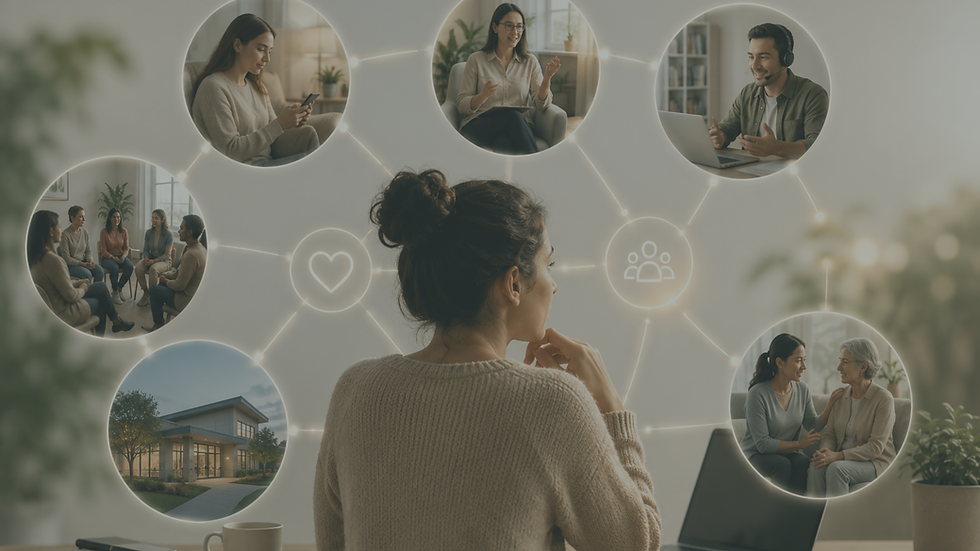
That’s when everything changed. Instead of building just one entity, we began building an ecosystem:
A clinical practice to provide care
A nonprofit to support the community
A directory to improve access and visibility
Each piece serves a different purpose…
But together, they create something much more powerful.
What a Mental Health Ecosystem Actually Does
An ecosystem doesn’t just provide services.
It:
Connects people to the right care faster
Supports providers, not just clients
Creates multiple entry points into mental health care
Reduces reliance on a single referral source
And most importantly:
It allows us to meet people where they are not where the system expects them to be.
Growth Without Burnout
One of the biggest lessons I’ve learned is this, you cannot scale impact by relying on one channel.
If all of your referrals come from:
One platform
One strategy
Or one system
You will always feel the pressure of inconsistency.
Building an ecosystem creates:
Stability
Diversification
And long-term sustainability
Collaboration Within Boundaries
As we’ve expanded, we’ve also learned how important it is to collaborate intentionally.
We don’t believe in competing for the same limited space.
We believe in:
Expanding access
Supporting communities
Creating partnerships rooted in impact
At the same time, we maintain clear boundaries around our operations, systems, and internal strategies.
Because collaboration works best when it’s built on:
clarity, alignment, and respect.

The Bigger Vision
Mental health is not just about filling schedules.
It’s about:
Access
Equity
Quality
And connection
And if we want to truly move the field forward, we have to think bigger than our individual practices.
We have to build systems.
Final Thoughts
Building a group practice is meaningful work.
But building an ecosystem?
That’s where real impact happens.
Because when you expand beyond your own walls, you don’t just grow your business, you help reshape how care is delivered.
You can learn more about our work at findyourbalancecenter.com, gethealthydirectory.com, and mental-empowerment.org.
We are intentional about who we collaborate with and focus on partnerships that expand access to care while honoring strong business boundaries. If that aligns with you, I’d welcome the opportunity to connect.


Comments